

Desire with Teeth
Toward an Ethics of Pacing in Early Desire

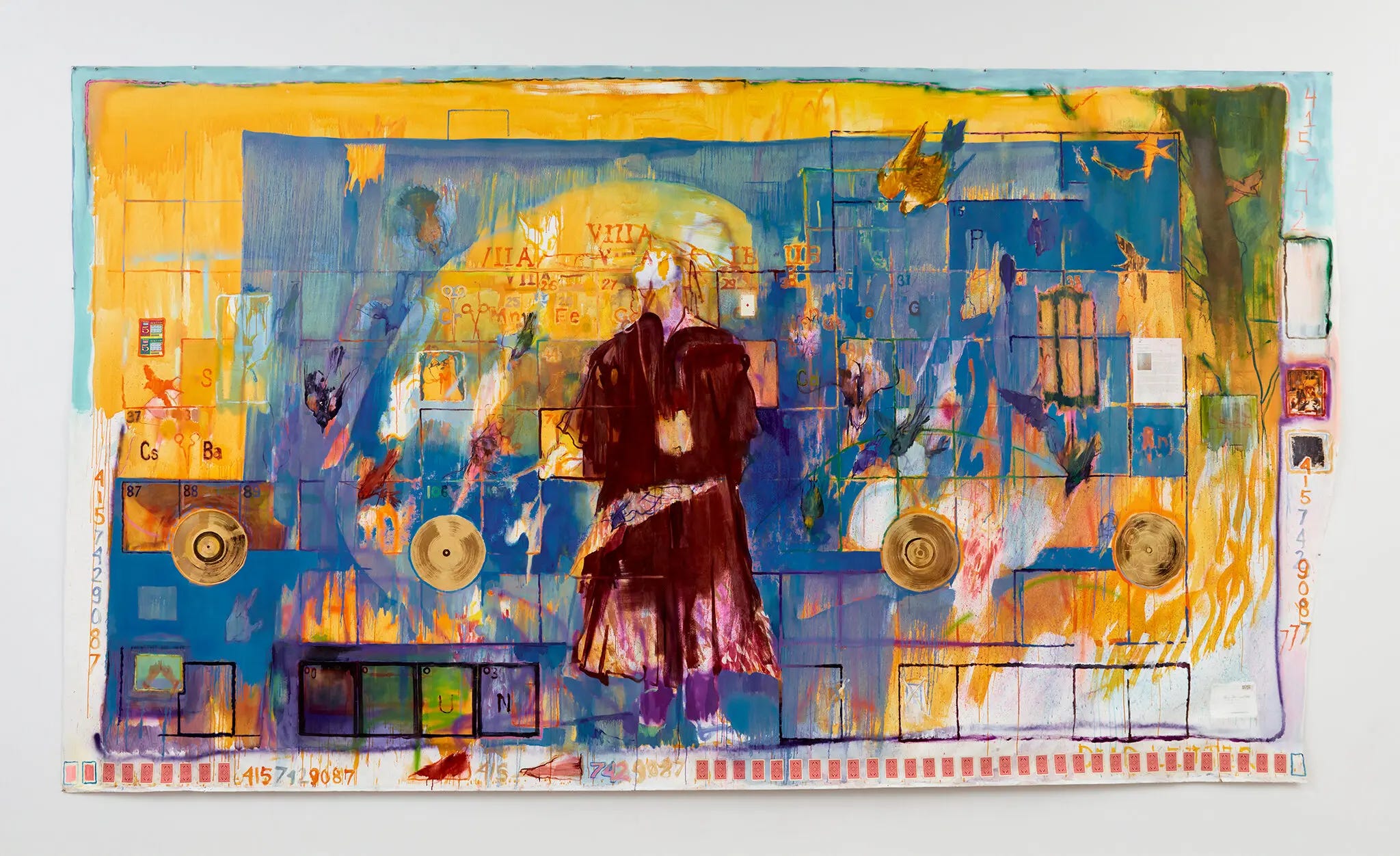
Big Mary says that relationships are all about negotiating nearness and distance. This feels especially true in the early stages, once attraction has begun to feel real enough to injure, to show its teeth. I notice that sometimes I want to respond to my lover’s texts immediately, to let the warmth of being wanted move cleanly through me and outward again, to participate in the small choreography of mutual availability that so often stands in for intimacy at the beginning. Other times, just as distinctly, I feel a gentle resistance, something like a request for air. The distinction feels meaningful. It also feels politically and historically overdetermined.
I’ve spent enough years inside feminist consciousness to know that women are almost never permitted neutral interiority. Our gestures arrive already annotated. Eagerness reads as desperation. Slowness reads as manipulation. Warmth reads as neediness. Distance reads as damage. There is no culturally stable position from which a woman can experience ambivalence without that ambivalence being translated into moral failure or strategy.
Meanwhile, contemporary romance unfolds inside an economic and technological environment that treats friction as defect. Byung-Chul Han describes late capitalism as a regime of smooth circulation, a world in which everything is optimized, where delay becomes pathology and opacity becomes error. It’s difficult not to see the dating app as one of this system’s more intimate prosthetics: a device designed to move bodies, desires, and expectations through one another with minimal resistance, to convert longing into a swipeable resource.
And yet desire continues to misbehave. It hesitates, gathers, retreats. It accelerates without warning. It flourishes in partial obstruction. The low-grade ache of waiting, the soft agitation of not knowing where one stands, the faintly masochistic sweetness of sensing someone else thinking about you while not being in contact- this is the texture of eros.
The trouble, of course, is that unavailability has a gendered history. Feminine desirability has long been staged through aestheticized withdrawal: the woman who is elusive but not autonomous, silent but not sovereign, distant in a way that reads as fragility rather than authorship. The ideal woman doesn’t take up space; she creates space for others. She disappears just enough to be missed, never enough to be gone.
So when I feel the impulse to hold back, to not immediately metabolize my desire into performance, I’m forced into an uncomfortable audit. Am I listening to my own rhythm, or reenacting a script that equates my worth with becoming smaller?
The question doesn’t resolve. But I’ve started to notice that self-erasure and self-restraint feel different in the body. Self-erasure tastes like contraction, like preemptive apology. Self-restraint, when it’s honest, feels more like good editing.
Contemporary discourse loves to frame nonresponsiveness as power. This is a shortcut. Silence does nothing on its own; it becomes power or cruelty or care depending on the relational field in which it operates. Sarah Sharma writes that exit stands in direct contradiction to care, which feels both true and incomplete. Exit can register as abandonment. But care that never refuses or interrupts begins to resemble something else entirely: self-erasure disguised as devotion.
Early relationships are metabolically intense. Nothing has stabilized yet. There are few shared rhythms, no archive of survival, no proof that the bond can withstand ordinary disappointment. There are only two nervous systems exchanging signals and trying, often clumsily, not to mistake every fluctuation for prophecy.
In this context, responsiveness can start to feel like giving too much away, not because generosity is bad, but because there isn’t yet a container sturdy enough to hold it. Holding back becomes an experiment in pacing. A way of letting the connection grow at a speed that doesn’t immediately collapse into fantasy.
I’m trying to learn an ethics of pacing because I no longer trust intensity as evidence of truth, and I can feel how often my availability is organized around fear rather than desire..
I don’t want to be the woman who disappears or the woman who collapses her interiority into constant availability. What I’m reaching toward instead is something less legible: I stay. I remain reachable. But I allow silence to exist without narrating it as failure. I give it some room.
I’m not writing from the position of someone who has transcended the desire to clutch. I know the post-traumatic fatigue of scarcity, the way past deprivation trains the body to experience even neutral distance as a prelude to disappearance. I know what it is to want validation in quantities that embarrass me, to feel a low, animal panic when affection is not immediately mirrored back, to translate silence into rejection.
There are days when my longing feels unreasonable. When I want more reassurance than the situation can plausibly sustain. When I can feel myself tilting toward a version of femininity I recognize too well: the woman who smooths, anticipates, over-explains, offers more than was asked for in the hope that surplus might purchase safety. The woman who confuses availability with intimacy.
I’m learning how to sit beside that too-muchness without letting it dictate my behavior. To feel the urge to grasp and not immediately obey it. To notice the story (this will go away! you’re already losing it! you must secure it now!) and practice relating to that story as fiction.
Most of the time, this looks unimpressive. A small, repetitive, imperfect refusal.
This is also where distance begins, very gradually, to change valence into a different register of contact, where space starts to feel less like threat and more like oxygen.. I want to experience space as charged rather than catastrophic, to let the gap between messages or dates become a place where longing can breathe, where anticipation can gather, where desire can quietly metabolize itself instead of being forced into constant disclosure.
Relaxing into this doesn’t feel natural to me. But sometimes I catch a glimpse of what it might mean to want without immediately reaching, to miss without collapsing, to trust (without evidence) that something can continue unfolding even when it’s not actively being fed.
Not everything that feels like closeness is care. Not everything that feels like distance is loss.
I tolerate the ambiguity because the alternative is a version of intimacy that cannot survive air.
This is where desire breathes.
This articel nails the friction between wanting connection and needing space without pathologizing either. The Byung-Chul Han framing around smooth circulation is spot on. Been navigating something similar lately where every pause feels loaded, and the distinction between self-erasure and genuine restraint is trickier than I expected.