

In a Chokehold
Desire critique can’t reach

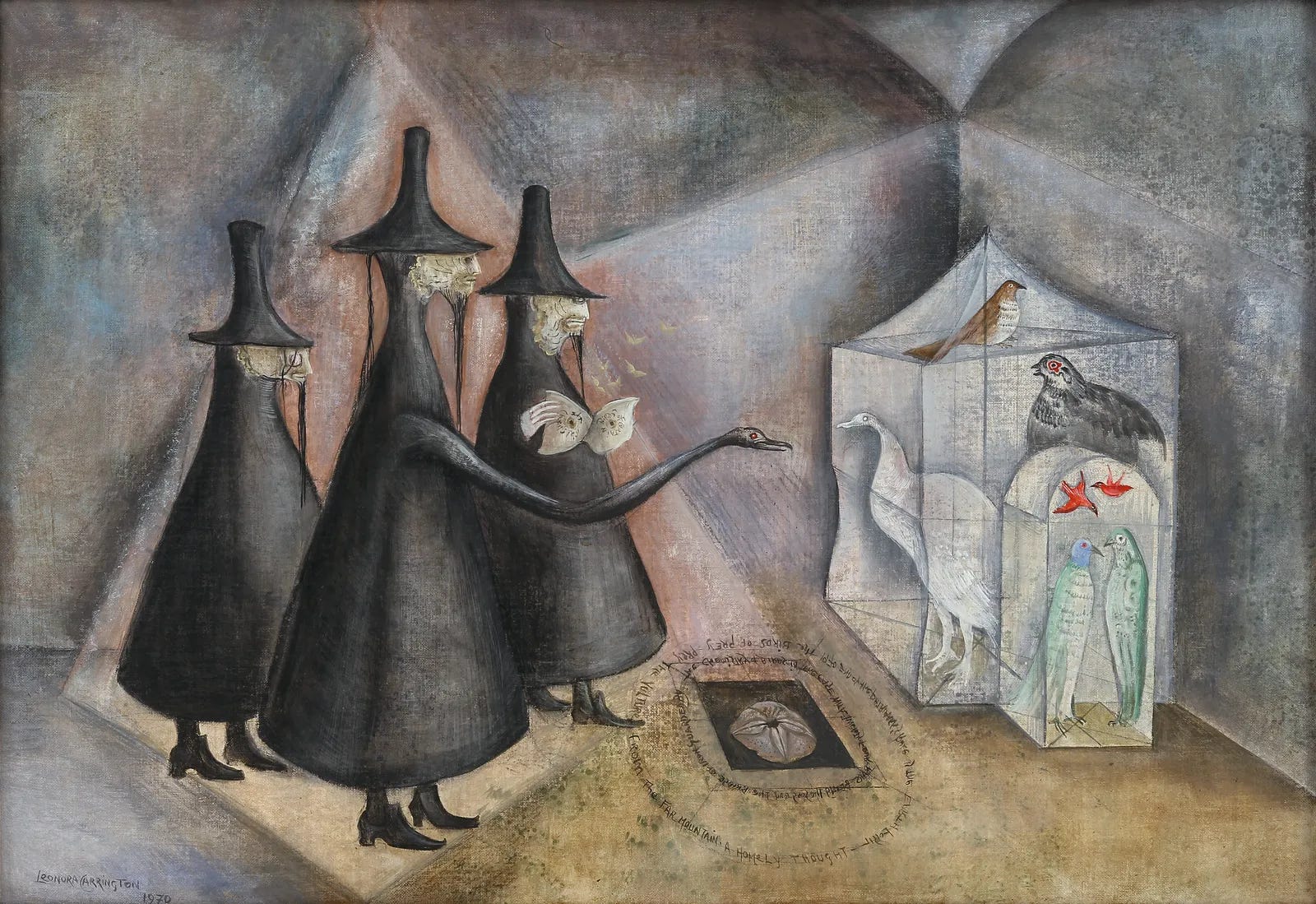
When I was in college, I had ambiguously consensual, intoxicated sex with strangers on a semi-regular basis, and not a single one of them attempted to choke me. Men have put their hands gesturally around my neck the first time we have sex, without any prior conversation, twice in the last two years. Both times I was surprised. Neither time did I say anything, which is itself information I’ve had to sit with.
I’ve thought about why I didn’t say anything. The honest answer is that it caught me off guard, and something in the situation (in me, in the accumulated sexual culture I’ve been marinating in) felt like it wasn’t worthy of direct address. The body learns what to absorb. My concern isn’t how strangulation became banal, but what it means that banality and desire can occupy the same moment without canceling each other out.
Kate Manne has an answer. I’m not sure it’s sufficient.
In a recent essay, Manne argues that sexual strangulation is neurologically dangerous, impossible to practice safely, and heavy with misogynistic social meaning. Her answer to whether consensual desire redeems it is, in her words, a “flat no.” Comments on Manne’s piece suggest relief at prohibition becoming intelligible again, relief that feminist seriousness might still include the possibility of forbidding specific (physically dangerous) sexual acts.
Manne deserves credit for her willingness. It’s risky to tell people what they shouldn’t do in bed. Her argument is more thoughtful than a caricature of anti-kink feminism allows. She rejects the fantasy that sexual preferences emerge untouched by culture. Pornography, she argues, has normalized and eroticized dominance in ways that shape what people desire. Sovereign individuals don’t pursue pre-political preferences. Her argument is recognizably indebted to Catharine MacKinnon: sexuality is socially produced, desire is sedimented by hierarchy, pornography is constitutive rather than reflective.
And because strangulation carries genuine neurological risk, feminist concern isn’t prudishness. It’s ordinary concern for women’s bodies and lives. Any account of desire worth having has to begin there.
Politics requires prohibitions all the time. But prohibition alone tells us very little about how to understand desires that endure despite critique. What interests me in Manne’s argument for refusal is the conception of desire and ethical agency it presupposes.
Because Manne’s argument takes structure seriously while ultimately relying on a model of ethical agency that sits uneasily alongside its account of how desire is socially produced. The essay repeatedly returns to a subject capable of standing apart from desire long enough to evaluate and govern it, even as it dismantles the conditions that would make such distance straightforward. This becomes visible where the piece splits into two arguments.
Her first (and most successful) argument is medical: sexual strangulation causes harm because it increases risk of brain injury. Repeated oxygen deprivation is associated with measurable neurological effects. On these grounds alone, you could construct a coherent public health argument against the practice. This claim doesn’t require feminist theory at all.
Her second argument is ideological. Strangulation, Manne contends, possesses misogynistic social meaning. It belongs to a broader culture in which male domination becomes eroticized and normalized. The fact that the act is overwhelmingly performed by men on women is meaningful. This is a different claim, one about symbolism, gender, representation, and power.
Those two claims are analytically distinct, even if they converge in practice. If the problem is neurological harm, then the ethical problem resembles all the others concerning risk, injury, and pleasure, albeit with unusually severe consequences. If the problem is social meaning, however, the question becomes harder: what does feminist analysis do with desires whose conditions of possibility are inseparable from structures it otherwise opposes? What happens when domination becomes erotic, when danger or surrender is part of what organizes desire itself? What sort of politics can address such desires without either condemning the subject who experiences them or pretending they arrived untouched by history?
