

When Information Forgets Time
On short-memory politics, neutrality-as-propaganda, and the Coates-Klein divide

In the days after Charlie Kirk was assassinated, Ezra Klein offered a soft, sanitizing, memorialization that foregrounded grief and restraint. Ta-Nehisi Coates answered with a Vanity Fair essay arguing that such remembrances laundered Kirk’s public record (he called it “whitewashing,”) by erasing rhetoric and alliances that did real harm.1 In response, Klein invited Coates onto his podcast to hash out the disagreement: when do we bridge, and when do we draw lines? That is the actual hinge of the episode, and it’s why the conversation keeps returning to history versus presentism.
I used to work in cancer research. Now, as a writer, artist, and teacher applying to doctoral programs, I examine and build aesthetic forms that slow interpretation and surface the histories our public political talk is inclined to suppress. That mix has left me skeptical of “neutral” frames. Over and over, I see the same move: a debate shifts from questions of power and precedent to questions of moderation and temperament, as the present distribution of views is quietly accepted as the landscape rather than the product of institutions that can be changed. It is a style of argument that prefers amnesia to analysis. The current debate between Ta-Nehisi Coates and Ezra Klein is a clean case of this pattern.
When discourse narrows its window on the past, neutrality starts to look like truth. With enough context trimmed, conflict appears to be an unfortunate clash of attitudes; with the context restored, it reads as the predictable outcome of law, policy, and structured force. The former is efficient and managerial. It produces clean charts and consensus-friendly phrasing. The latter demands time. It demands naming names. It is noisier and, in public, riskier, because it insists on the ledger of what has actually been done to whom and by what instruments. In clinics and datasets I watched this play out around cancer outcomes. Disparities in health look cultural when you erase the timeline; they look governed when you restore trial design, access constraints, and policy.
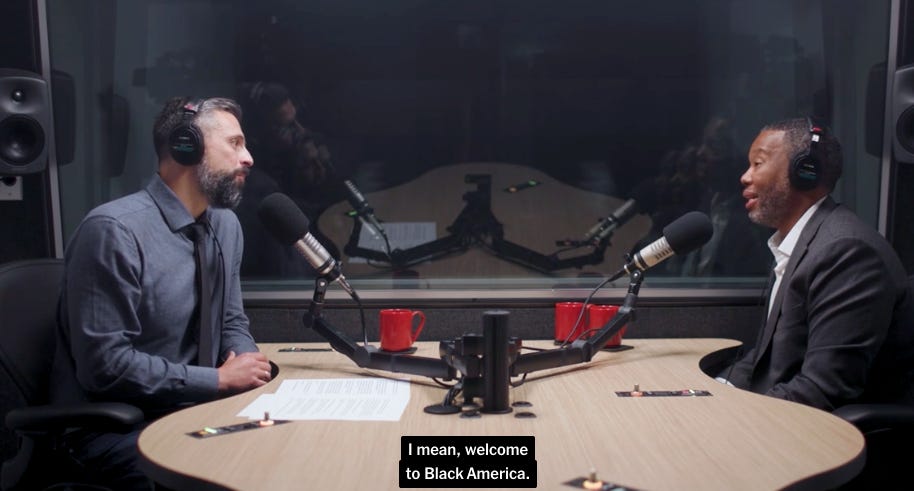
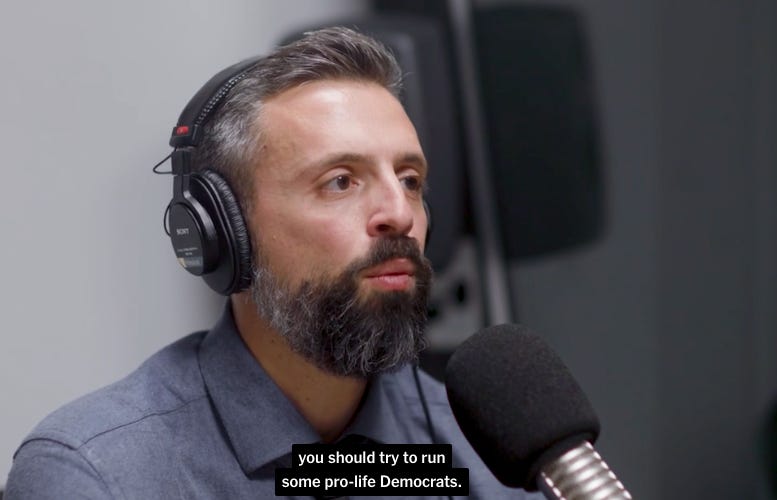
This temporal distinction sits beneath the roles Coates and Klein articulate for themselves. Coates defines his role as writer and witness. He refuses to decline another person’s humanity, and he refuses the euphemisms that make a violation of that humanity palatable. Klein, by contrast, casts himself as preferably operating in “peacetime”: following his intellectual and political “curiosities” and, above all, trying to “win”- to popularize coalition-building that reduces harm for the greatest number, even if that requires accommodating positions that harm some (like his argument for running pro-life Dems in Midwestern races). I do not doubt the sincerity of that aim, but the baseline it smuggles in. Winning on an unexamined baseline treats the current distribution of opinion as natural rather than made. Pragmatism collapses into presentism; strategy becomes optimization within the status quo. That is a recipe for misdiagnosis, where etiquette is mistaken for remedy and messaging for policy.
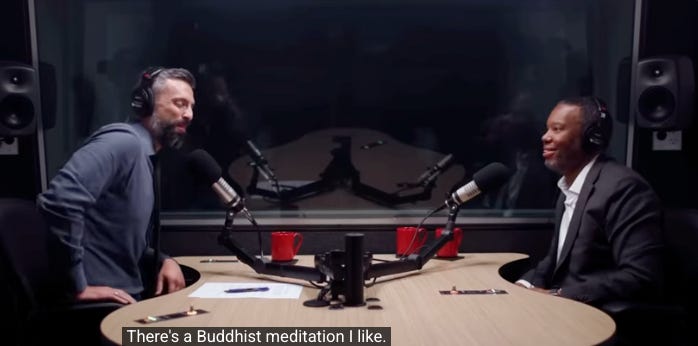
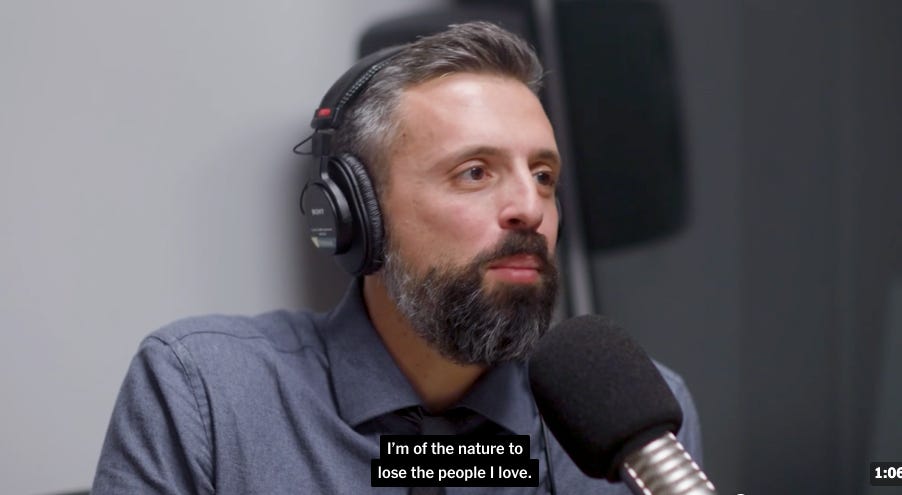
You can hear the divergence in the episode’s hinge moments. Coates returns to precedent (King shot while preaching nonviolence and love) insisting that present conflicts are effects with traceable causes. Klein answers by universalizing the register: in the Five Remembrances, suffering is a human constant. That’s a move from the homicide of an individual to the abstraction of human mortality, from who did what to whom to the metaphysics of decline and loss. It converts a historical indictment into a lesson about impermanence. The moral upshot is tidy but the political cost is steep. Responsibility diffuses, and the demand for judgment is displaced by a call for composure. Coates makes history shoulder the weight of explanation and Klein relocates it to temperament. The first keeps agency visible, and the second renders it atmospheric.
Coates will not cooperate with that temporality. He will not abbreviate the ledger. When the topic is a public figure whose rhetoric and alliances did real harm, Coates refuses polite generality. Klein misreads this as fatalism. It’s method. If your explanation begins outside history, your prescriptions will be the wrong ones. You will think you need better etiquette when what you actually need is to change the rules (or flip the table and play another game).
I have nothing against the Remembrances, or Buddhism in general. But as an argumentative move in that moment Klein performed a transition from public causation to private hygiene, from what the law and the mob did to what the self might serenely accept. The moral of the story slid from “people did this to us” to “life happens.” It was actually appalling.
That translation has its own history. Buddhism has been a vehicle for political action as well as interior discipline. Buddhist monks didn’t deploy mindfulness as a sedative when they burned their bodies to demand public attention on the war in Vietnam. The American version of Buddhism popular with white collar audiences has too often been repackaged as a productivity hack and stress management tool, a solvent for conflict that leaves structures untouched (see my several earlier posts about the weird neoliberal narcissism of “self-help”). The same tradition can be insurgent but is typically (now) anesthetic. Which one you choose is political. In this conversation, the pivot to Buddhism, accompanied by talk of depolarization and persuasion, acted as a de-politicization valve. Grief became inevitable, history became atmospheric, and institutional claims were replaced by a ritual of equanimity. The move is both soothing and completely evasive.
What is at stake is not tone versus tone, it’s method versus method. Klein’s short-memory politics emphasizes depolarization and coalition breadth and is allergic to stating causes plainly. Causes offend audiences. Coates’s insistence on embedding his argument into the memory and legacy of human enslavement as politics and as structure and as form, the long-memory method, treats causes as the only honest starting point. It assumes that if a coalition cannot bear to hear how the present was made, it’s not the coalition we need. Short-memory method will present itself as the more “practical” because it’s more comfortable to the median listener and flattering to the median host. The long-memory method looks costly because it refuses shortcuts and pacification. But only one of these methods has a record of altering the conditions that produced the harm. Only one is grounded in the victories of Black freedom struggles. The other has a record of laundering those conditions in the name of “preventing harm.” If that sounds harsh, it’s because the harms are not hypothetical.
Power concedes nothing without a demand. It never has and it never will. Find out just what a people will submit to, and you have found out the exact amount of injustice and wrong which will be imposed upon them; and these will continue till they are resisted with either words or blows, or with both. The limits of tyrants are prescribed by the endurance of those whom they oppress. - Frederick Douglass, 1857
I understand Klein’s preference for depolarization as a means to reduce damage in the near term. I’ve taught classrooms and worked in clinics. I am not in love with permanent crisis. But the conviction that conflict should be cooled rather than named is not neutral. It encodes a judgment about time. It prefers the management of sentiments to the contestation of structures. It’s easy to produce media that fits that preference: insist on shared existence, elide asymmetries, rely on polling as a proxy for possibility, present the present as weather. It is harder to produce media that begins inside history because the result will be less soothing. It will say that some conflicts are not communication breakdowns but the normal functioning of a distribution of power. It will ask listeners to bear that account without immediately translating it into advice for not upsetting anyone.

You do not govern well by lying to yourself about history. If your objective is to protect the vulnerable, you need coalitions that can carry the weight of an honest story. That story starts by naming the institutional causes of harm. It does not confuse serenity with safety. It does not treat neutrality as a universal solvent. Neutrality, in the way it is sometimes practiced by famous podcasters and in op-eds, is a temporal technology. It’s a choice to keep the window narrow enough that power is backgrounded and the present looks natural. It becomes a vice when it’s used to domesticate claims that ought to be allowed to make listeners uncomfortable because the world they describe is uncomfortable. For some, the world is more than that: it is unbearable.

If there is a practical recommendation embedded here, it’s about form. The forms we use to tell public stories should force duration. They should mark breaks in law with the same enthusiasm with which they mark shifts in sentiment. They should disclose category-making. They should show, as Coates so skillfully does, that history is not a sepia filter but the moving mechanism in the present tense. This is what I try to do in my visual work: build devices that slow the glance, make the viewer stay long enough for causation to become visible, and refuse arrangements that deliver clean takeaways at the price of truth. I’m not always successful, but I try.
I am not proposing austerity in language or a ban on gentleness. I’m proposing that we stop mistaking politeness for care, and we stop mistaking depolarization for remedy. Coates’s refusal to keep the ledger intact and decline euphemism for tactical comfort is not theatrical. It’s the minimum condition for honest talk. The way Klein routes conflict into personal serenity is methodologically empty. It begins outside history and therefore cannot see what it must move. If you want a coalition that actually protects the vulnerable, widen the memory, not just the tent.
You cannot fix what you refuse to name, and you cannot name what you refuse to remember. The rest is stagecraft.
Coates makes the method formal on the page: by quoting Kirk again and again. Kirk’s word accumulate until they resist sentimental smoothing. Quotation isn’t ornamental, it keeps agency visible, narrows plausible deniability, and forces duration so readers sit with the record.